

Heavy rainfall places significant strain on wastewater networks. In many conventional gravity sewer systems, stormwater and groundwater can enter the sewer through cracks, faulty joints, deteriorated manholes, and illegal stormwater connections. This phenomenon, known as inflow and infiltration (I&I), can dramatically increase flows during wet weather events and create operational challenges for councils, utilities and treatment plants.
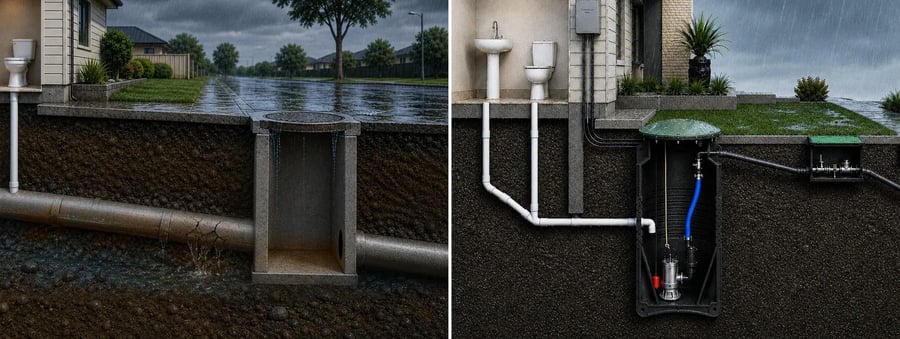
Pressure sewer systems offer a different approach. Their sealed pipe networks can significantly reduce opportunities for unwanted water to enter the sewer system, helping improve network performance during wet weather.
For a broader overview of how these systems operate, see our guide to How does a pressure sewer system work?
What is inflow and infiltration in sewer systems?
Although often discussed together, infiltration and inflow are two different issues.
Infiltration
Infiltration occurs when groundwater enters the sewer network through defects such as:
- cracked pipes
- damaged joints
- faulty service connections
- aging infrastructure
This typically happens below ground level where the surrounding soil becomes saturated.
Inflow
Inflow occurs when stormwater enters the sewer system through direct connections or openings, such as:
- damaged manhole covers
- illegal roof drainage connections
- surface water entering maintenance structures
- flooded access chambers
Unlike infiltration, inflow can cause very rapid increases in sewer flow during rainfall events.
Why wet weather flows are a problem
Wastewater networks must be designed to accommodate both everyday flows and increased flows during wet weather events. When infiltration and inflow occur, stormwater and groundwater occupy capacity that should be reserved for wastewater, increasing the size of pipes, pump stations and treatment infrastructure required across the network.
For example:
|
Condition |
Typical Flow |
|
Dry weather |
100 L/s |
|
Moderate rainfall |
180 L/s |
|
Heavy rainfall event |
300-400 L/s |
These additional flows can result in:
- increased pumping costs
- reduced treatment plant efficiency
- higher energy consumption
- capacity constraints
- sewer overflows and environmental incidents
- premature wear on infrastructure
In many cases, utilities end up pumping, storing and treating large volumes of stormwater that should never have entered the wastewater network in the first place.
Why gravity sewer systems are more vulnerable
Traditional gravity sewer networks often contain:
- large diameter pipelines
- numerous manholes
- multiple access points
- extensive pipe joints
- older infrastructure sections
Every joint, manhole, connection and Gravity network municipal pump station represents a potential pathway for groundwater or stormwater entry.
As networks age, these vulnerabilities increase dramatically. Even relatively small defects can compound quickly and allow significant volumes of water into the system, including during minor rainfall events.
If you are comparing wastewater collection methods more broadly, read our guide to Gravity Sewer vs Pressure Sewer to understand where each system is most suitable.
How pressure sewer systems reduce infiltration and inflow
Unlike conventional sewer pump stations that rely on gravity, pressure sewer systems use a sealed pressure pipe network that greatly reduces the number of locations where groundwater and stormwater can enter the system. This design makes pressure sewer an effective strategy for reducing inflow and infiltration in sewer systems.
For a more detailed explanation of system components and operation, see our article What Is a Pressure Sewer System?
By operating as a closed, pressurised system, there are far fewer opportunities for external water to enter. This is because:
- Sealed pressure pipework
Pressure mains use continuous polyethylene (PE) PN16 rated pipework with welded joints which significantly reduces leakage points and potential infiltration pathways, compared to traditional gravity systems.
- Fewer manholes and access points
Being that pressure sewer systems are installed directly at properties and pump straight into the network, they require fewer access points, reducing the number of locations where stormwater can enter during rainfall events.
- Positive internal pressure
During operation, pressure sewer pits maintain positive internal pressure so that they’re less susceptible to infiltration because the pressure differential works in the opposite direction. As opposed to gravity sewers where external groundwater pressure can force water into pipe defects.
- Smaller pipe diameters
Pressure sewer systems use smaller diameter pipes than equivalent gravity networks. This reduces the total surface area exposed to groundwater and lowers the overall risk of infiltration.
Example – Coastal community upgrade
Consider a coastal township with aging septic systems and a gravity sewer network. During dry weather, the wastewater treatment plant receives approximately 1 ML/day.
After a rain event, flows could easily increase to 3 ML/day due to infiltration and inflow. A pressure sewer upgrade replaces sections of aging gravity infrastructure with sealed pressure mains.
Following implementation:
- wet weather peak flows are significantly reduced
- treatment plant loading becomes more predictable
- pumping costs decrease
- environmental compliance improves
Additional benefits of lower wet weather flows
-
Lower operating costs - Treating stormwater is expensive. Every litre of unwanted water entering the sewer system increases pumping, storage and treatment costs.
-
Improved asset life - Reducing hydraulic surges and excessive wet weather flows places less stress on pumps, pipelines and treatment infrastructure.
-
Better network planning - More predictable flow patterns make it easier for utilities and engineers to plan future expansions and upgrades.
-
Reduced environmental risk - Lower wet weather flows can help minimise overflow events and improve environmental outcomes during major storm events.
Pressure sewer systems as part of a long-term I&I strategy
While no wastewater collection system can completely eliminate inflow and infiltration, pressure sewer systems can significantly reduce the pathways through which groundwater and stormwater enter the system.
For councils, developers, and utilities facing challenges with aging infrastructure, difficult terrain or septic tank replacement programs, pressure sewer networks provide a practical solution that combines reliable wastewater transport with improved resistance to infiltration and inflow.
By reducing unwanted stormwater and groundwater entry, pressure sewer systems help create more efficient, predictable and resilient wastewater networks.
Improve wet weather network performance
Reducing inflow and infiltration in sewer systems can lower operating costs, improve treatment plant performance and increase the long-term reliability of wastewater infrastructure.
If you are investigating pressure sewer systems for a new development, septic tank replacement program or network upgrade, contact Global Water. Our team provides tailored advice and pressure sewer solutions for councils, developers and utilities across Australia and New Zealand.
FAQ
Tags: Pressure sewer systems