PRODUCT INFORMATION
Our pressure sewer systems provide an efficient wastewater collection and transfer solution for developments where conventional gravity sewer infrastructure may be impractical or expensive to install.
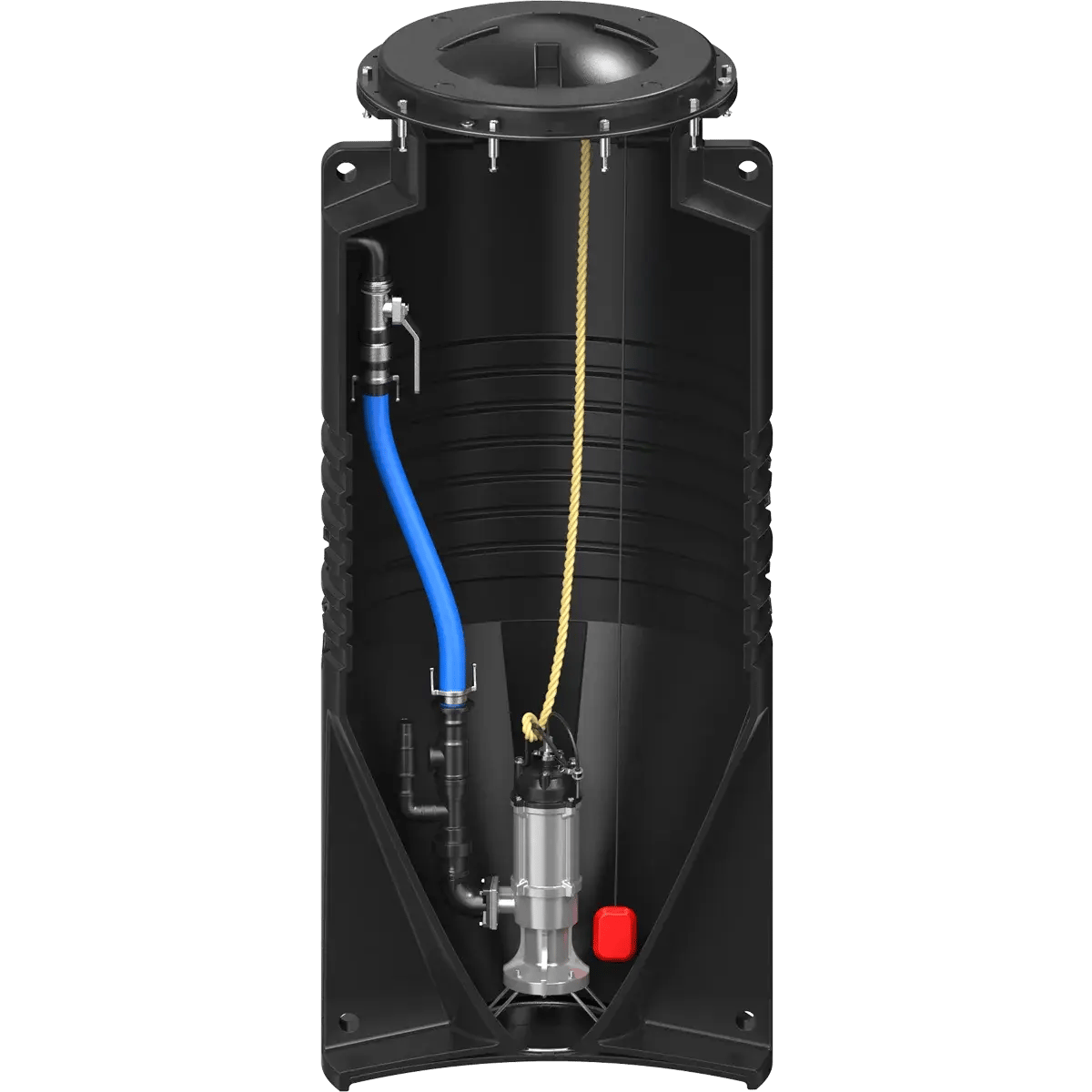
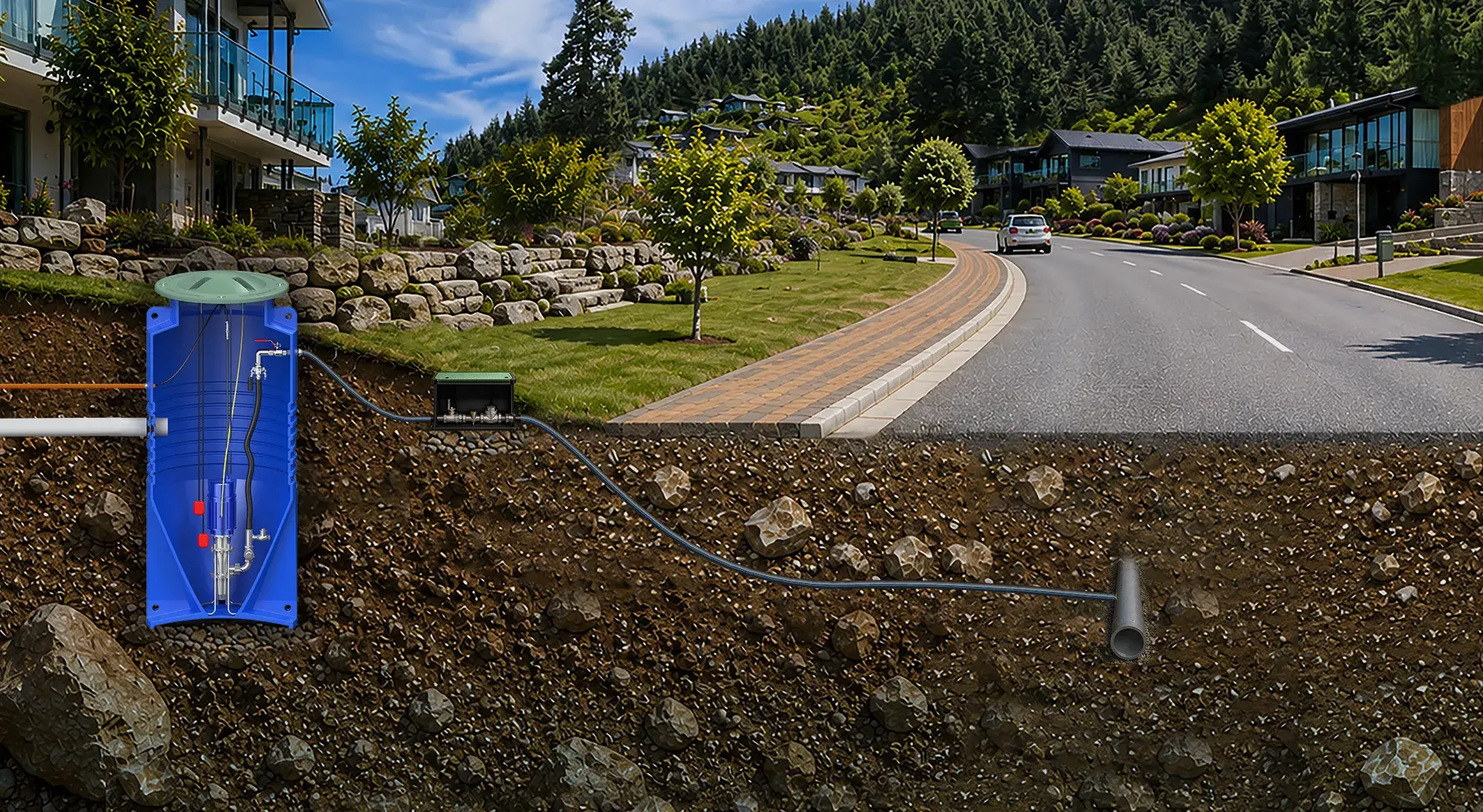
Each system combines a high-head grinder pump, durable polyethylene chamber, advanced control panel and alarm system. Wastewater is automatically collected, ground and pumped into a pressurised sewer network through small-bore pipework.
This makes DrainAce suitable for pressure and low pressure sewer system applications where wastewater needs to be transferred over long distances, uphill or through areas with difficult ground conditions.
Multiple chamber sizes, pump materials and cover options are available, allowing the system to be configured around site conditions, network requirements and project specifications. These systems can be supplied as complete pressure sewer pump packages for new developments, network extensions and wastewater infrastructure projects.
Why pressure sewer systems make financial and environmental sense
- Trench depth of 600 mm compared with 3 m or more for gravity sewer installations, dramatically lowering excavation and civil works
- No requirement for sewer pipes to be continuously laid at grade
- Small-diameter HDPE pipework can follow the natural terrain and may be installed alongside water mains by the same contractor
- Sealed pipe networks help eliminate groundwater infiltration into the sewer network
- More consistent wastewater flows can help reduce peak loads entering downstream infrastructure
- Reduced excavation and construction requirements can contribute to a lower overall project carbon footprint
- Directional boring can be used where appropriate to minimise surface disruption
- Pressure allows wastewater to be transferred across flat, undulating or steep terrain without relying solely on gravity
Pressure sewer system components
High-head grinder pump
At the heart of these systems is a positive displacement high-head grinder pump designed for low-flow, high-head wastewater and sewage applications.
A heavy-duty cutter impeller and hardened cutter ring reduce solids to a small size before the wastewater enters the pressure sewer network, helping reduce the risk of clogging in small-bore pipework.
Two pump variants are available with equivalent hydraulic performance.
| Specification |
DrainAce Standard |
DrainAce Premium |
| Model |
GPGH32-110W |
GPGN32-110W |
| Material |
Cast-iron |
316 Stainless Steel |
| Weight (kg) |
45 |
| Recommended use |
Standard network conditions |
Aggressive soils and coastal environments |
| Maximum flow (L/min) |
50 |
| Maximum head (m) |
50 |
| Motor (kW / V) |
1.1 / 240 |
| Discharge (mm) |
32 |
The DrainAce Standard grinder pump features a durable cast-iron body, heavy duty double SIC mechanical seal and hardened grinding components. Single and three-phase motor options are available, and valves and pipework are 316 stainless steel.
The DrainAce Premium grinder pump features all 316 stainless steel pump and motor, pipework and valves, plus a heavy duty double SIC mechanical seal and hardened grinding components to provide ultimate durability in harsh and demanding operating environments.
Polyethylene pump chambers
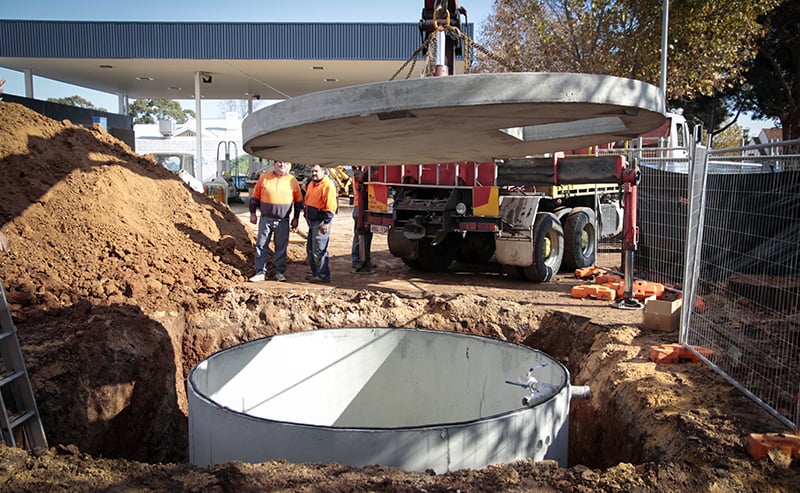
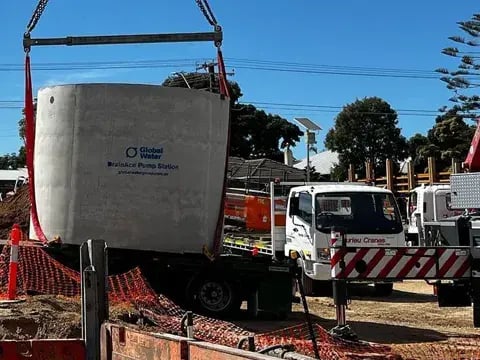
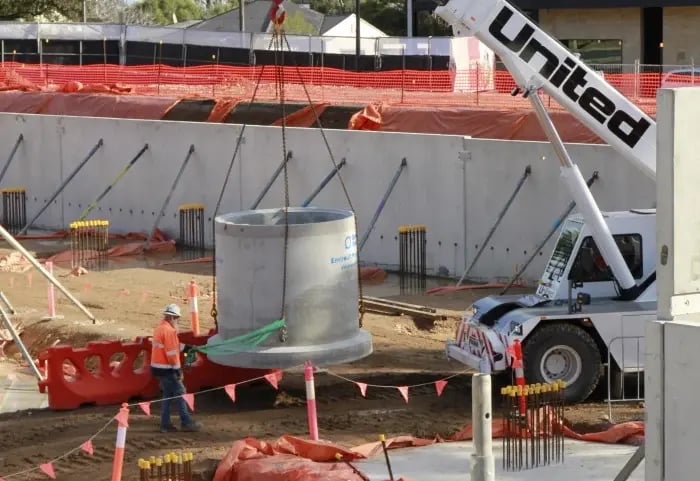
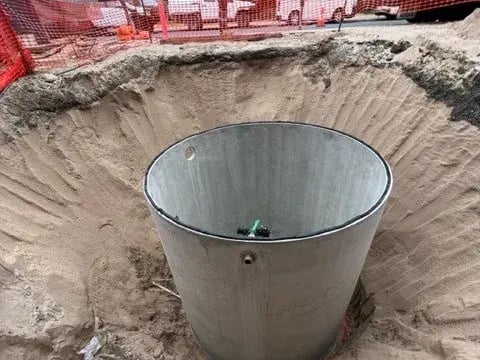
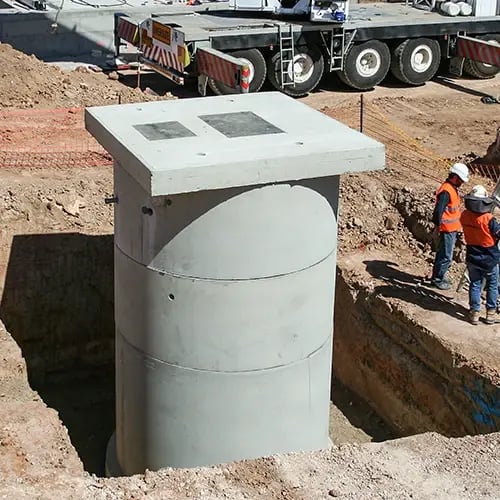
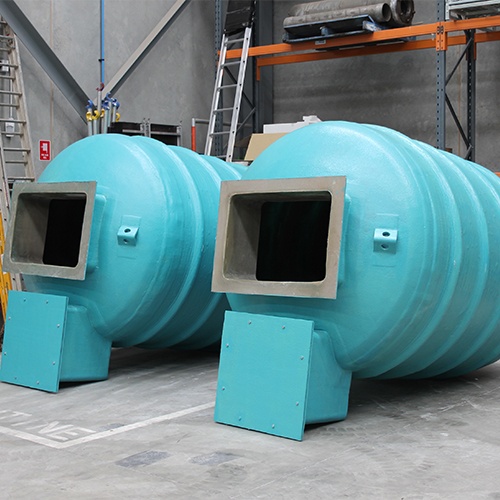
The grinder pump is housed within a high-strength polyethylene chamber designed for underground installation.
The standard 900 L chamber complies with AS/NZS 1546.1:2008 and provides a durable collection and storage point before wastewater is pumped into the network.
| |
DAP 09X |
DAP 10P–DAP 105 |
| Dimensions (mm) |
Ø900 × 2065 |
Ø850 × 2160 to 1950 x 4050 |
| Capacity (L) |
900 |
1050 to 10,500 |
| High-level alarm |
Included |
| Generator input |
Option |
Additional chamber sizes are available from 175 L to 10,500 L allowing the pressure sewage system to be configured for different property types, wastewater volumes and project requirements. View DrainAce chamber options.
Smart pressure sewer controller
Each system can be supplied with a modern controller designed specifically for pressure sewer applications. The controller provides pump and motor protection while simplifying commissioning, operation and monitoring.
Key capabilities include pump overload protection, dry-run protection, brownout detection and high-level alarms. Configurable start-up and alarm delays, pump run-window scheduling and manual pump operation provide greater flexibility when setting up the system.
Built-in Wi-Fi allows commissioning and monitoring from a Wi-Fi-enabled device, while IoT-ready connectivity and BMS output provide options for integration with broader monitoring infrastructure.
Additional options include battery backup, a generator plug with changeover switch and UV-stabilised plastic or metal enclosures.
| Feature |
Included |
| Local alarm indication |
✔️ |
| High-level detection |
✔️ |
| Cycle counting |
✔️ |
| Clear fault indication |
✔️ |
| Telemetry connectivity options |
✔️ |
| Generator port option |
✔️ |
| Weatherproof enclosure |
✔️ |
| Industry standard components |
✔️ |
Pressure sewer system cover options
A range of cover configurations is available to suit installation location and expected traffic loads.
| Cover type |
Application |
| Non-trafficable |
General installations |
| Pedestrian rated |
Walkways and public access areas |
| Class B |
Light vehicle traffic areas |
| Class D |
Heavy-duty traffic areas |
Certification and approvals
| Certification |
Status |
| AS/NZS 1546.1 |
Certified |
| SA Health |
Approved |
| NSW Health |
Approved |
Pressure sewer solutions for Australia and New Zealand
Pressure sewer infrastructure needs to be designed around the characteristics of the site, expected wastewater flows and the requirements of the wider sewer network.
Global Water supplies pressure sewer systems across Australia and New Zealand, with pump, chamber, controller and cover configurations available to suit different applications and operating environments.
With teams in both Australia and New Zealand, we can provide local advice and support for pressure sewer projects in each market. Our team can assist with selecting a suitable pressure sewer pump package and system configuration for new developments, network extensions and challenging wastewater projects.