

Dry well pump stations are an essential solution for safely and efficiently transferring wastewater, stormwater, or harvested water. While concrete dry wells have a long-established reputation, modern polyethylene dry wells offer a lightweight, corrosion-resistant alternative that works differently in appearance and function. Understanding how these systems connect, operate, and integrate with tanks or irrigation networks helps ensure the right design choice for your project.
What is a dry well pump station?
A dry well pump station is a type of pumping system where the pumps and control equipment are housed in a dry chamber, separate from the liquid being pumped. Unlike wet wells, where pumps sit directly in the wastewater or stormwater, dry well pump stations allow maintenance staff to access and service the equipment without entering the wet pit.
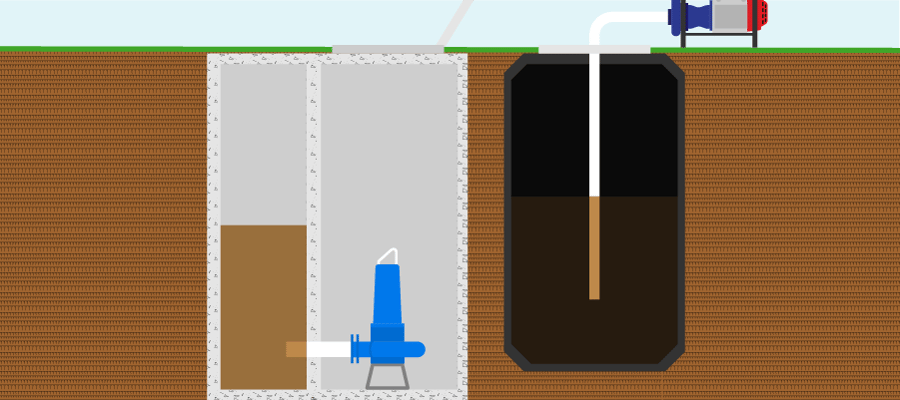
In many installations, particularly with poly dry well stations, the chamber sits alongside a tank or storage vessel. The pumps draw water through a suction or inlet line connected between the tank and the dry well. Once activated, the pumps transfer the water to its destination, such as a garden irrigation system, stormwater discharge line, sewer rising main, or downstream storage. This setup ensures the pumps stay dry while still handling the full hydraulic load of the tank.
Dry well pump stations are commonly used in wastewater, sewer, and stormwater applications. They provide reliable operation while improving safety and reducing maintenance complexity.
Wet well vs dry well pump stations
Understanding the difference between wet well and dry well systems is important when planning a pumping station.
-
Wet well pump stations: Submersible pumps are located directly in the liquid. While common, wet wells can be prone to odour, corrosion, and difficult pump removal.
-
Dry well pump stations: Surface-mounted pumps (or dry-mounted submersible pumps with cooling kits) operate in a dry chamber. Connecting pipework allows the pumps to draw from the adjacent tank or wet area. This keeps equipment protected from harsh conditions and enables simple above-floor access for maintenance, especially valuable with poly dry wells, where lightweight construction makes installation easier while still supporting reliable pump operation.
Advantages of dry well pumping stations
Dry well pumping stations offer several benefits:
-
Safe maintenance: Staff can inspect or service pumps without entering a wet pit or lifting submersible pumps from a chamber. With poly dry wells in particular, pump access is even easier due to integrated mounting surfaces and accessible internal layout.
-
Reduced odor and corrosion: Keeping pumps and electrical components out of the liquid reduces corrosion and extends equipment life, especially in wastewater environments.
-
Reliable operation: Ideal for wastewater, sewer, and stormwater applications, ensuring pumps operate efficiently with reduced blockages and minimal downtime.
-
Easier motor and control integration: Housing the pumps in the dry well allows for easier integration with variable frequency drives (VFDs) and sophisticated motor control panels, often improving efficiency and prolonging motor life. Poly chambers often don't include pre-moulded cable entries and pipe connections to allow for accurate onsite penetration.
Using a dry well pumping station reduces operational risks and improves system longevity, though it requires adequate surface space and consideration for noise or architectural concerns.
Dry well pump stations: Polyethylene vs concrete
Choosing the right material for your dry well pump station depends on your project requirements.
Polyethylene Dry Well Pump Stations
-
Lightweight and easy to transport and install
-
Highly corrosion-resistant, making it ideal for harsh environments
-
Well suited for pump-out of tanks for irrigation or reuse, where suction lines and compact layouts are beneficial
-
Cost-effective for smaller or medium-sized projects
Concrete dry well pump stations
-
Extremely durable with a long lifespan
-
Suitable for large-scale installations or heavy-duty wastewater and sewer applications
-
Provides superior structural strength for deep or high-volume pump stations
At Global Water, we provide both polyethylene and concrete dry well pump stations to meet a wide range of municipal and industrial requirements. Our team can help determine the best material and configuration for your project, ensuring reliability and optimal performance. Whether you’re planning a new installation or upgrading an existing station, a dry well pump station can improve safety, reliability, and efficiency for wastewater, sewer, and stormwater applications.
To learn more about polyethylene and concrete dry well pump stations, or to discuss the right solution for your project, contact Global Water at (08) 8275 8000 or email sales@globalwatergroup.com.au
Tags: Submersible pumps, Wastewater, Polyethylene pump stations, Stormwater, Concrete pump station