Global Water provides trade waste and wastewater treatment solutions designed to manage, treat, and control effluent across commercial and industrial applications.
We provide a range of equipment and systems, including trade waste treatment units, oil separators, grease arrestors, sewage grinders, and submersible mixers, each engineered to handle specific wastewater conditions and contaminant loads.
These solutions support the effective treatment of wastewater by removing solids, grease, hydrocarbons, and organic waste from wastewater streams, helping businesses across Australia meet discharge requirements, protect infrastructure, and maintain efficient operations.
With proven capabilities and flexible configurations, we deliver reliable, cost-effective systems tailored to site-specific requirements - from pre-treatment through to full wastewater management.
Wastewater is water containing contaminants from domestic, commercial, or industrial processes, including trade waste generated from business and industrial activities. It often contains grease, hydrocarbons, solids, and organic matter that must be treated before discharge. Without proper wastewater management, this can lead to system blockages and deterioration, environmental harm, and non-compliance with trade waste regulations.
Global Water’s wastewater treatment solutions are designed to remove and control these contaminants at the source, ensuring safe discharge to sewer or enabling reuse where required.
By effectively managing wastewater, these systems:
prevent blockages and protect downstream infrastructure
reduce trade waste and discharge costs
support compliance with local authority requirements
improve overall system performance and reliability
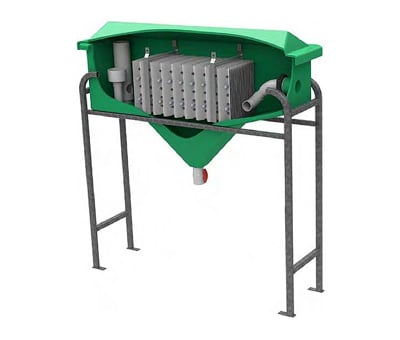
The Oil Muncher™ oil separator range is designed for effective industrial wastewater treatment, removing oils and solids from trade waste and washdown water using enhanced gravity separation.
It effectively separates hydrocarbons from wastewater, helping protect drainage infrastructure and support compliant discharge in Australian commercial and industrial environments.
Ideal for applications such as washdown bays, car and truck wash facilities, and workshop or maintenance areas.
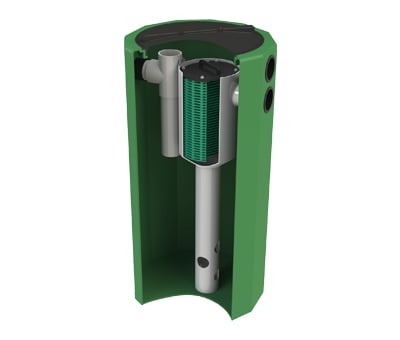
The Grease Muncher™ Model GM700 grease arrestor is a compact wastewater treatment device designed to remove fats, oils, and grease from wastewater in smaller commercial applications.
Lightweight and easy to install, it is well suited to smaller or temporary installations, such as leased premises. The unit has undergone extensive field trials in Australia and is suitable for flow rates up to 1000 L/hr.
Ideal for cafés, small restaurants, canteens, club kitchens, and fast food outlets.
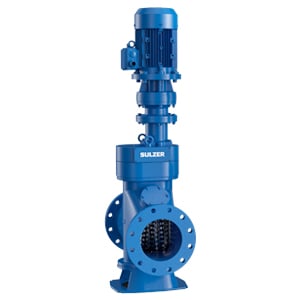
The Muffin Monster™ inline sewage grinder is designed to support reliable wastewater management systems by protecting pumps and critical infrastructure.
Its dual-shaft, slow-speed, high-torque design breaks down tough solids such as wipes, plastics, and fibrous materials, preventing blockages and reducing wear on downstream infrastructure.
Ideal for applications such as pump stations, sludge processing, headworks, airports, and high-load wastewater environments.
The Sulzer submersible mixer type ABS is designed for efficient mixing and circulation in industrial wastewater applications, including aggressive and abrasive liquids.
It is used to mix wastewater and sludge within tanks and pump sumps, keeping solids suspended and preventing settling or surface build-up.
Suited for applications requiring localised mixing, such as maintaining sludge consistency in storage tanks or preventing deposits in sumps and treatment zones.
The Sulzer Flow Boosters ABS XSB is designed to enhance flow and circulation within wastewater treatment systems and industrial applications.
It supports key processes such as equalisation and biological treatment, ensuring consistent fluid movement and improved system performance.
With high-efficiency operation and reduced energy consumption, it delivers strong mixing performance while lowering operational and maintenance costs.
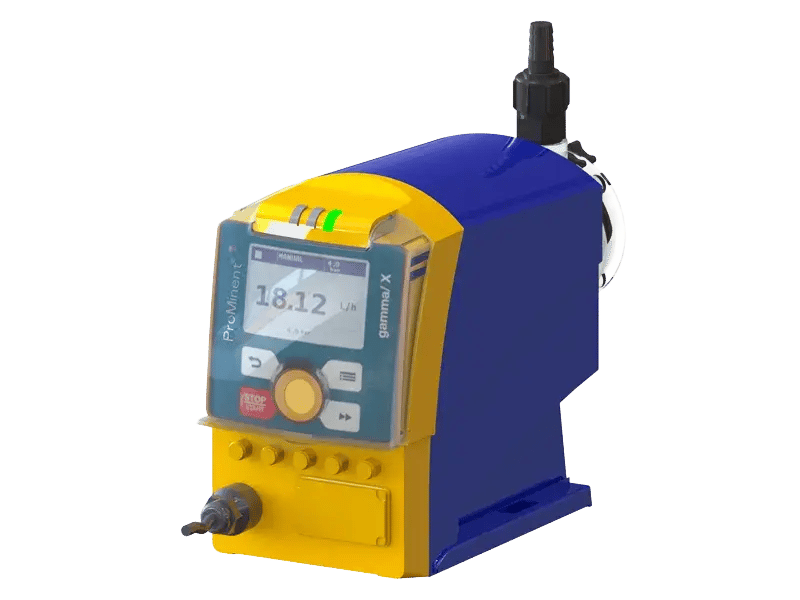
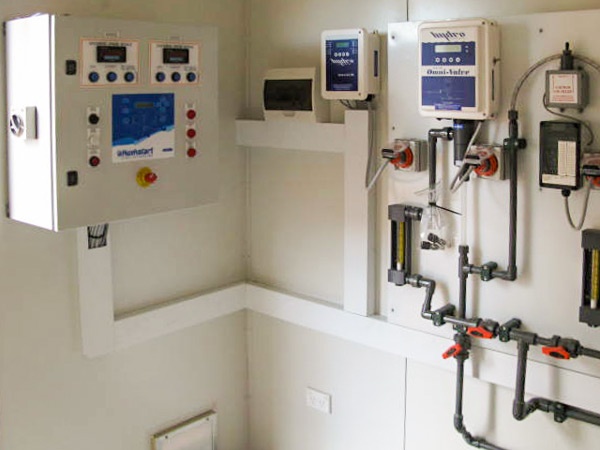
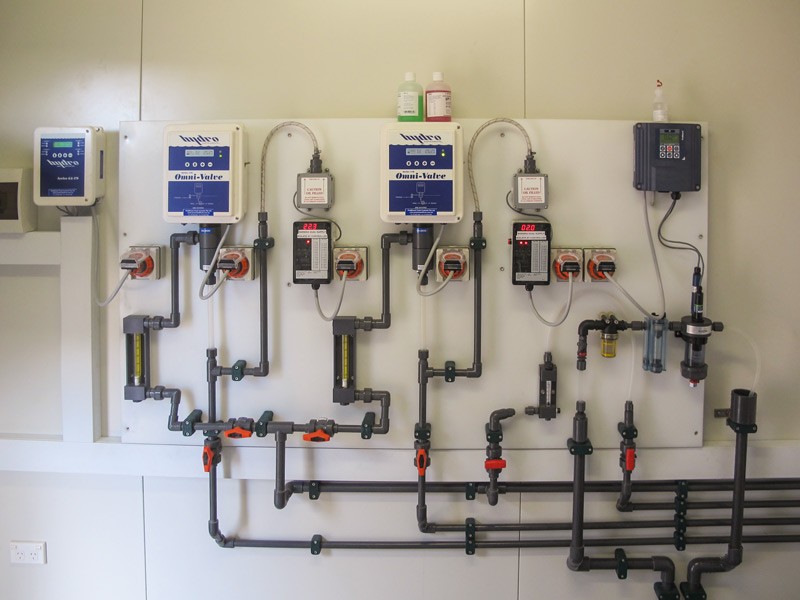
ProMinent dosing and chlorination systems are designed to accurately control chemical dosing, including chlorine and pH levels, across a range of wastewater applications.
Using automated sensors and control systems, they monitor, analyse, and adjust dosing in real time to maintain consistent water quality.
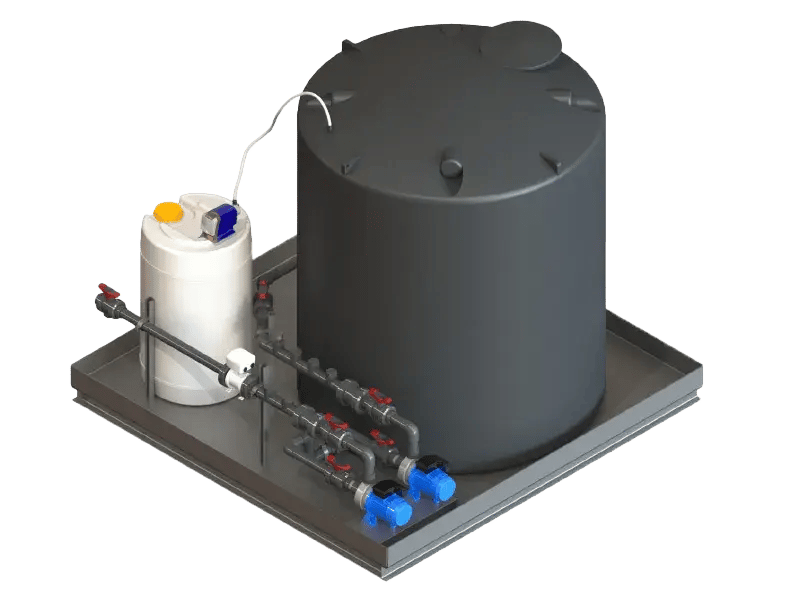
Global Water trade waste treatment systems are designed to treat contaminated wastewater from commercial and industrial operations before discharge to sewer.
These systems can be used as standalone units or integrated with components such as grease arrestors, oil separators, dosing systems, grinders and mixers to create a tailored wastewater management system suited to specific site requirements
Wastewater treatment systems operate through a combination of processes.
Inlet and screening
Wastewater enters the system, where larger solids and debris are captured or reduced.
Separation
Grease, oil, and solids are separated from the water through gravity or mechanical processes.
Breakdown/conditioning
Grinders and mixers help reduce solids and maintain consistent flow conditions.
Treatment
Contaminants are removed or reduced to meet discharge or reuse requirements.
Dosing
Chemical dosing is used where required to neutralise or condition wastewater.
Discharge
Treated wastewater is safely discharged to the sewer network or reused, depending on system design.
Global Water’s wastewater treatment solutions are suitable for a wide range of commercial and industrial environments, including:
Commercial kitchens and food processing facilities
Service stations and automotive workshops
Industrial and manufacturing sites
Shopping centres and commercial buildings
Mining and infrastructure projects
Trade waste and high-load wastewater applications
These systems are ideal for industrial sites requiring reliable wastewater management, compliance, and infrastructure protection.
Trade waste refers to wastewater generated from commercial or industrial activities, such as kitchens, workshops, and manufacturing processes. It typically contains higher levels of contaminants and must be treated before discharge to meet local authority requirements.
Our systems are designed to treat a wide range of wastewater, including trade waste from commercial kitchens (grease arrestors), oily water from workshops and service stations (oil plate separators), and industrial effluent containing solids, grease, and hydrocarbons. The exact solution depends on the type and concentration of contaminants generated on site.
If your operations produce wastewater containing grease, oil, solids, or other contaminants, a wastewater treatment system is typically required to meet local regulations and discharge requirements. Australian water authorities and water utilities enforce trade waste regulations, and non-compliance can result in fines, system restrictions, or increased discharge costs. If in doubt, contact your local water authority to see if they have requirements for your specific project.
These are essential components within wastewater management systems, removing grease and hydrocarbons before discharge to protect infrastructure and ensure compliance.
Most municipal water authorities have strict regulations around the quality of wastewater that is accepted into their sewer systems. If site activities such as cooking a commercial kitchen are expected to produce wastewater more concentrated with contaminants, the expectation is that the concentrated wastewater is pre-treated by a treatment device (or treatment train) such as a grease arrestor prior to discharging into the wastewater network to avoid penalties and return wastewater quality back to acceptable levels.
Inline sewage grinders break down solids and waste materials into smaller particles, allowing wastewater to flow more easily through pipework and pump systems. This reduces the risk of blockages, improves reliability, protects downstream assets such as pumps, and helps maintain consistent system operation.
Yes. Effective wastewater management reduces blockages, protects equipment, and lowers ongoing maintenance costs.
Yes, many wastewater treatment solutions can be integrated into existing infrastructure and systems, including retrofitting grease arrestors, separators, or grinders into current drainage pipe layouts. These solutions assist in upgrading sites to meet new or existing compliance requirements and improve trade waste quality without major redevelopment.
The right wastewater treatment system depends on contaminant type, required inflow and outflow and the acceptable wastewater condition required at the discharge location. A combination of equipment, such as grease arrestors, separators, pumps and inline grinders are often used to achieve the required level of treatment and compliance.